
Mini-LED vs. OLED vs. QD-OLED: Which is the Best Gaming Monitor Technology in 2025?
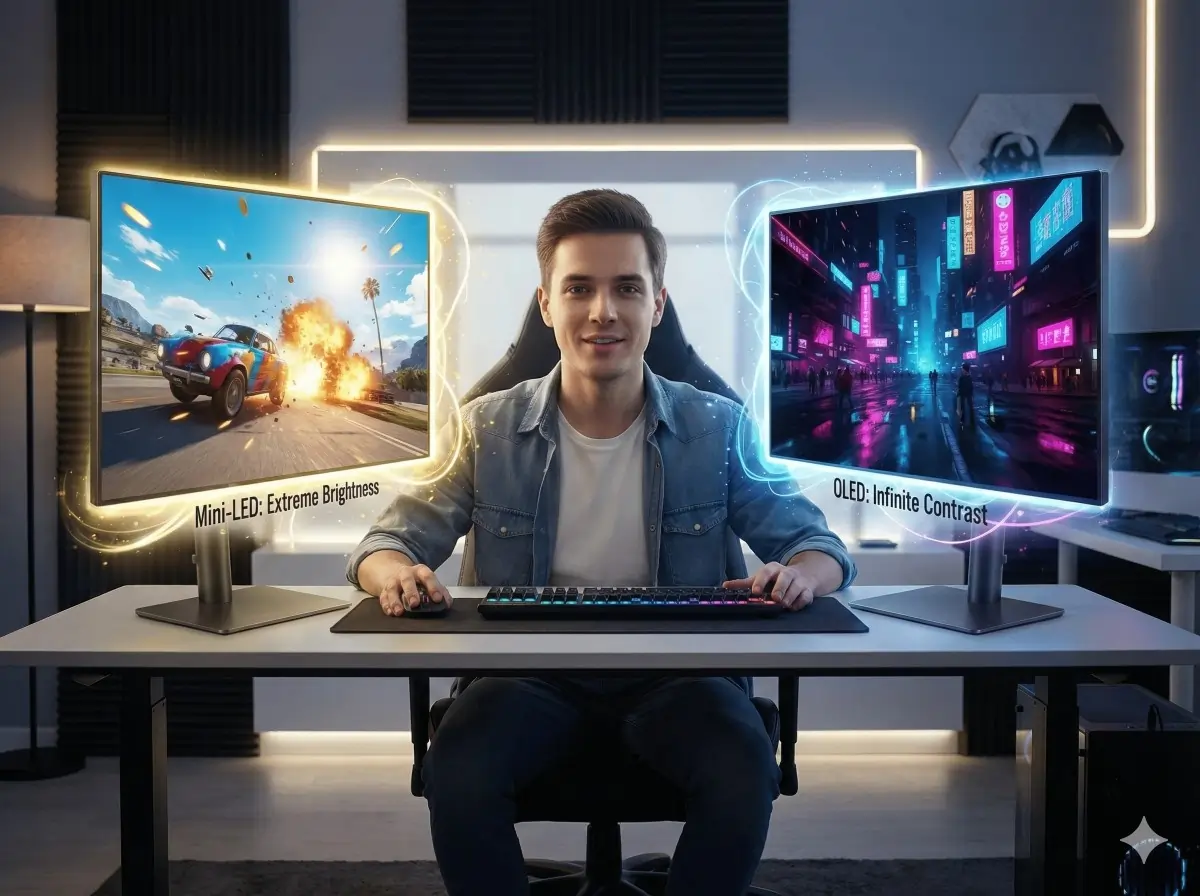

- 1. Our Top Gaming Monitor Picks for 2025
- 1.1. Best Overall Mini-LED: BenQ MOBIUZ EX321UX
- 1.2. Best Overall QD-OLED: MSI MPG 321URX
- 1.3. Best Value 1440p Mini-LED: Cooler Master Tempest GP27Q
- 1.4. Best 1440p "Speed" OLED: Alienware AW2725DF
- 2. What is Mini-LED? The Brightness Champion
- 2.1. The Core Advantages:
- 3. What is OLED & QD-OLED? The Contrast King
- 3.1. The OLED Superpowers:
- 4. Head-to-Head: Mini-LED vs. OLED vs. QD-OLED
- 5. The Verdict: Who Should Buy Which Monitor?
- 5.1. You Should Buy a Mini-LED Monitor IF...
- 5.2. You Should Buy an OLED or QD-OLED Monitor IF...
- 6. FAQs
- 6.1. Is burn-in still a big problem for OLED in 2025?
- 6.2. Which is better for the PS5 or Xbox Series X?
- 6.3. Is 1440p still relevant in 2025?
- 7. Conclusion: Which Will You Choose?
If you're looking to build or upgrade a high-end gaming setup in 2025, you’ll inevitably face one critical decision that will define your entire visual experience. It's not your graphics card or your CPU; it’s your ultimate portal into your pixelated realms. Today, that choice comes down to a massive three-way debate: Mini-LED vs. OLED vs. QD-OLED.
Marketing for all three will tell you they are the undisputed champion. The trouble is, they achieve their dazzling results in essentially dissimilar manners, and the practical distinction between them is significant. Is Mini-LED better than OLED for your specific room, or is the new QD-OLED the true king of 2025? This guide is here to slice through the noise. We’ll give you our top monitor picks including the BenQ MOBIUZ EX321UX and MSI MPG 321URX right at the start, then dive deep into the technology behind them. By the end, you’ll know exactly how each works, their respective strengths and weaknesses, and be able to make the perfect choice for your games, your room, and your budget.
Disclosure: This article contains affiliate links. As an Amazon Associate, we earn from qualifying purchases at no extra cost to you. It helps cover hosting, coffee, and the time spent testing tools like this — appreciate the support.
Our Top Gaming Monitor Picks for 2025
For those who want the quick answer, here are our top monitor recommendations. We’ve selected these models not just for their specs, but for how they represent the absolute best of their respective technologies today.
Best Overall Mini-LED: BenQ MOBIUZ EX321UX
The BenQ MOBIUZ EX321UX represents the peak of what a 32-inch 4K Mini-LED monitor can achieve in 2025. Built around an IPS-type panel with a massive 1,152-zone Mini-LED backlight, it delivers on the ultra-bright, eye-popping promise of HDR without the compromises often seen in budget models.
Why it’s a Top Pick: This is a 4K powerhouse designed for versatility. It reaches a staggering 1,400 nits of peak brightness, allowing HDR content to truly "pop" even in sun-drenched rooms where OLEDs might struggle. Because it uses an LCD-based backlight, there is zero risk of screen burn-in, making it the ultimate "worry-free" choice for gamers who also use their PC for 8+ hours of work, browsing, or coding.
- Pros: Incredible peak brightness (1,400 nits); zero burn-in risk; excellent connectivity with DisplayPort 2.1 and 90W USB-C.
- Cons: Black levels are exceptional but cannot match the "infinite" contrast of OLED; slight blooming in very dark scenes.
Check Latest Price and HDR Specs Here
Best Overall QD-OLED: MSI MPG 321URX
The MSI MPG 321URX is a masterpiece of modern display engineering and our pick for the best OLED gaming monitor currently on the market. It utilizes a 3rd Gen QD-OLED panel, which pairs the infinite contrast of OLED with a Quantum Dot layer for significantly improved color vibrancy and higher peak brightness.
Why it’s a Top Pick: If you are a cinematic gamer who craves perfect blacks and infinite contrast, this is your endgame. It pairs a crisp 4K resolution with a buttery-smooth 240Hz refresh rate, far exceeding the old 120Hz OLED standards. With a near-instant 0.03ms response time, motion blur is effectively non-existent, providing a level of clarity in fast-paced games that LCD-based monitors simply cannot reach.
- Pros: Perfect, infinite contrast; instantaneous 0.03ms response time; vibrant color saturation with Delta E ≤ 2.
- Cons: Lower sustained brightness compared to Mini-LED; small (though mitigated) risk of burn-in.
See the Stunning Visuals and Availability Here
Best Value 1440p Mini-LED: Cooler Master Tempest GP27Q
For years, true high-performance HDR was reserved for the most expensive monitors; the Cooler Master Tempest GP27Q breaks that barrier. It brings a reliable 576-zone Mini-LED local dimming system to a price point accessible to far more gamers.
Why it’s a Top Pick: This monitor strikes the "sweet spot" for 1440p gaming. It delivers 1,200 nits of peak brightness, allowing for punchy, high-impact HDR visuals that make games like Cyberpunk 2077 or Elden Ring look incredible. It’s an uber versatile “do-it-all” monitor, with a built-in KVM switch and 90W USB-C power delivery, making it equally suited to a professional workstation as a hardcore gaming rig.
- Pros: High-end HDR performance at a budget-friendly price; 1,200 nits peak brightness; built-in KVM switch.
- Cons: Fewer dimming zones than premium 4K models (more noticeable blooming).
Upgrade Your Setup and Check Price Here
Best 1440p "Speed" OLED: Alienware AW2725DF
For the competitive gamer, speed is everything, and the Alienware AW2725DF is built for one purpose: to be the fastest, clearest 1440p gaming monitor on the planet. It combines a 1440p resolution with a mind-boggling 360Hz refresh rate on a QD-OLED panel.
Why it’s a Top Pick: In esports titles like Valorant or Counter-Strike 2, motion clarity is your biggest advantage. The combination of a 360Hz refresh rate and OLED’s instant pixel response time means targets remain perfectly sharp even during the fastest camera pans. Backed by Alienware’s renowned 3-year burn-in warranty, it offers elite performance with added peace of mind.
- Pros: Blazing-fast 360Hz refresh rate; elite motion clarity; industry-leading burn-in warranty.
- Cons: 1440p is less crisp than 4K for cinematic games.
Check Specs on Your New Secret Weapon Here
What is Mini-LED? The Brightness Champion
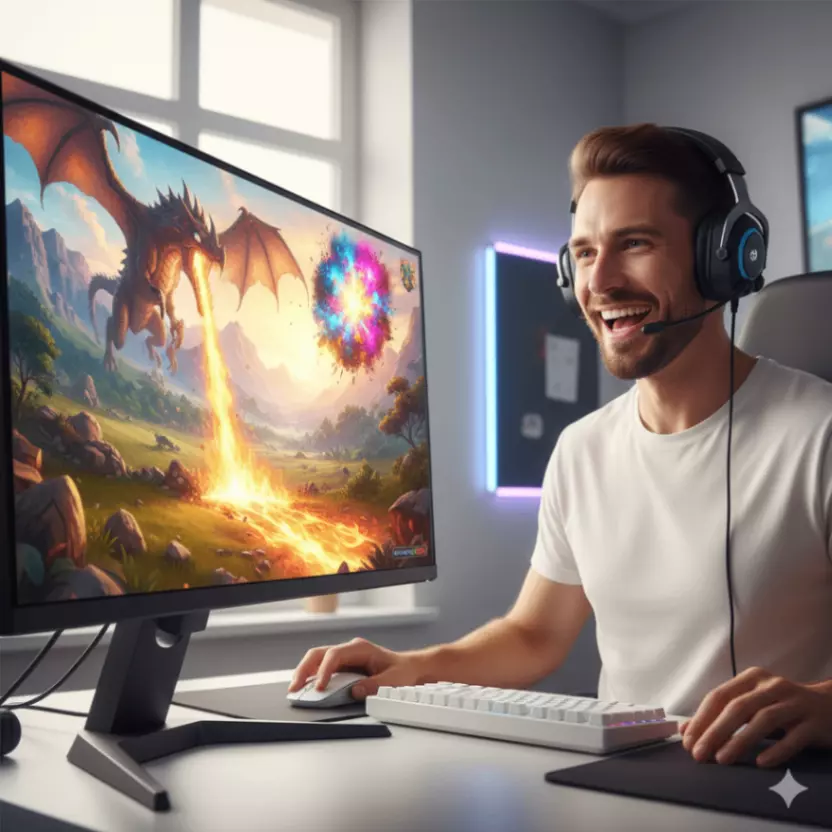
To decide if Mini-LED is better than OLED, we first have to understand the technology behind the "Brightness Champion".
Think of a standard LCD monitor as being lit by a handful of lightbulbs behind the screen. A Mini-LED monitor takes that concept and puts it on steroids by replacing those few bulbs with thousands of incredibly tiny LEDs. This massive array serves as the backlight, which is divided into hundreds or thousands of "local dimming zones".
The Core Advantages:
- Raw Brightness Power: This is the signature feature. Models like the BenQ EX321UX can hit over 1,400 nits, making sunlit skies and explosions in HDR games look intensely realistic. This brightness allows the screen to "punch through" glare in rooms with heavy ambient light.
- Zero Burn-In Risk: Because it remains an LCD panel at its heart, there is no organic material to degrade. This makes Mini-LED a 100% worry-free choice for gamers who leave their PC on for long periods with static elements like taskbars or stock tickers visible.
Great Black Levels: While not "perfect," the ability to dim specific zones means dark scenes have real depth, a massive evolution from older edge-lit or full-array LED displays.
What is OLED & QD-OLED? The Contrast King

OLED (Organic Light Emitting Diode) technology works in a completely different, almost magical way. Instead of a backlight, think of each individual pixel—all 8 million of them in a 4K display—as its own microscopic, self-contained light bulb.
The OLED Superpowers:
- Infinite Contrast: When an OLED pixel needs to be black, it emits zero light. This produces “true black” levels which no Mini-LED can exactly equal, lending the image a distinct, three-dimensional richness, particularly in dark rooms.
- Instant Pixel Response: Because there is no liquid crystal to physically move, pixels change state almost instantly (0.03ms). This completely removes ‘ghosting’ or smearing and is the gold standard for competitive gaming.
- The Rise of QD-OLED: In 2025, QD-OLED has become the premium choice. By adding a Quantum Dot layer, these panels (found in our MSI and Alienware picks) produce more vibrant, accurate colors and can achieve higher peak brightness than standard OLEDs.
Head-to-Head: Mini-LED vs. OLED vs. QD-OLED
To make the choice as clear as possible, here’s a direct, side-by-side comparison of the two technologies on the features that matter most to gamers.
| Feature | Mini-LED | Standard OLED | QD-OLED (2025) | The Winner |
| Brightness (HDR) | Excellent (1400+ nits) | Good (~600-800 nits) | Great (~1000 nits) | Mini-LED |
| Contrast (Blacks) | Very Good | Perfect (Infinite) | Perfect (Infinite) | OLED/QD-OLED |
| Response Time | Fast (1ms) | Instant (0.03ms) | Instant (0.03ms) | OLED/QD-OLED |
| Burn-In Risk | Zero | Low/Moderate | Low (Improved) | Mini-LED |
| Ideal Room | Bright/Well-lit | Dim/Dark | Versatile | Depends on Room |
The Verdict: Who Should Buy Which Monitor?
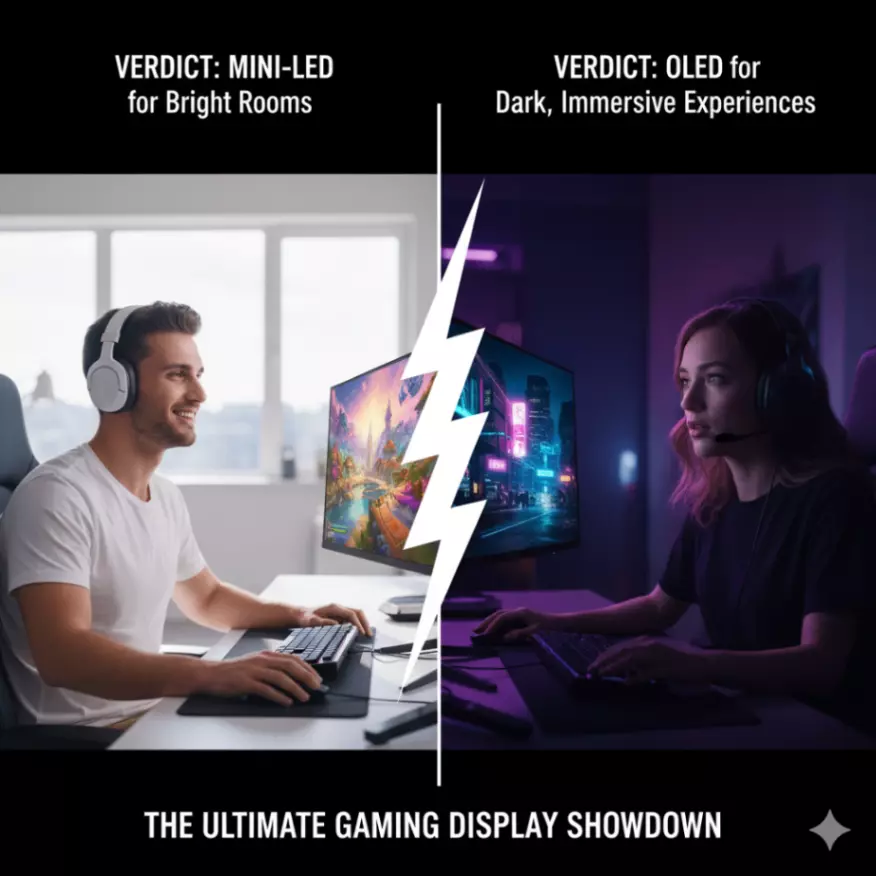
Now that you get the tech, the decision is a whole lot easier. It really depends on what you value and your specific gaming setup.
You Should Buy a Mini-LED Monitor IF...
- You game in a bright room: If your setup is next to sun-drenched windows, the raw brightness of Mini-LED will slice through the glare and provide a vivid image where OLEDs might look washed out.
- You want the most impactful HDR: If your top priority is "searing" brightness—explosions and sun effects that actually make you squint—Mini-LED delivers more raw power.
- You use your monitor for work: If you spend your day with static windows, taskbars, or code editors open, Mini-LED is the 100% safe, worry-free choice.
You Should Buy an OLED or QD-OLED Monitor IF...
- You are a "Pixel Purist": If you play cinematic, atmospheric games like Resident Evil or Starfield and can't stand seeing "grayish" blacks in dark scenes, OLED is the only answer.
- You game in a dark room: This is where OLED truly shines, providing a level of depth and immersion that no backlight-based tech can touch.
You are a Competitive Gamer: For esports titles where tracking moving targets is life or death, the instantaneous response of OLED provides the sharpest possible picture.
FAQs
Is burn-in still a big problem for OLED in 2025?
It is far less risky than it used to be. Newer monitors have advanced “OLED Care” technology such as pixel shift and static logo dimming to safeguard the panel. For most gamers playing a variety of content, it will likely never be an issue. However, Mini-LED remains the only 100% worry-free technology.
Which is better for the PS5 or Xbox Series X?
Both are beautiful, but 4K Mini-LED is the go-to for ‘couch gaming’ in living rooms, as Mini-LED TVs tend to be brighter. However, if you have a dedicated gaming "battlestation" in a dim room, a 4K OLED will offer a more cinematic experience.
Is 1440p still relevant in 2025?
Absolutely. While 4K is the standard for visual fidelity, 1440p remains the "sweet spot" for performance. Monitors like the Alienware AW2725DF use 1440p to reach elite 360Hz refresh rates that 4K monitors cannot yet achieve.
Conclusion: Which Will You Choose?
In 2025, there is no single "best" technology, only the technology that is best for you. The decision boils down to a simple trade-off. Choose Mini-LED for a super-bright, versatile, and completely burn-in-proof monitor that excels in any lighting condition. Choose OLED or QD-OLED for breathtaking, perfect contrast and unbeatable motion speed that offers the most cinematic and responsive experience possible.
Now that you’ve experienced the technology and our favorite selections, what monitor are you going to get? Let us know in the comments below!
This video below provides a practical side-by-side comparison of current Mini-LED and OLED display technologies to help you see the differences in brightness and contrast:

Comments (0)
Leave a Comment